
 EN
EN
The Science of Slow Rebound: How Viscoelasticity Enables Adaptive Support
Time-Dependent Deformation and Molecular Relaxation Under Body Load
Memory foam and other viscoelastic materials react to pressure in their own special way. They push back right away like regular springs but then slowly mold around whatever is pressing on them. When someone lies on a mattress made with these materials, the long chain molecules inside start to loosen up and shift positions during those first few seconds after contact. This brief period matters quite a bit because it's when the material gives instant support at first, then continues adjusting shape over time as weight distributes itself across the surface. The result? Less concentrated pressure spots compared to what happens with standard foams that either bounce back too much or don't adapt well enough. Studies show best results happen when how fast the foam settles matches up with how our bodies naturally adjust to different sleeping positions throughout the night.
From NASA Origins to Modern Hybrid Memory Foam Mattress Formulations
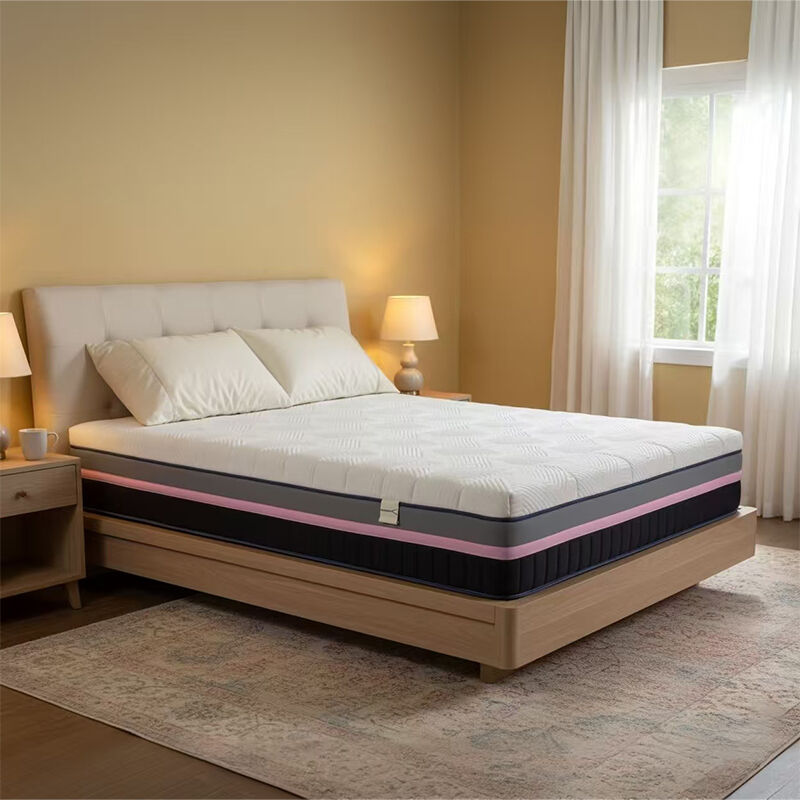
Originally developed from NASA’s 1960s shock-absorbing polymer research, today’s memory foam mattresses apply refined viscoelastic engineering for superior sleep performance. Modern hybrids use strategic layering:
- A primary viscoelastic layer delivers targeted pressure relief through slow rebound
- Transition foams add responsive pushback for spinal support and ease of movement
- Cooling infusions—such as graphite or phase-change microcapsules—regulate surface temperature
These advances preserve memory foam’s motion isolation and body-conforming benefits while resolving early limitations in breathability, durability, and edge support—transforming space-age innovation into clinically validated, everyday sleep solutions.
Pressure Relief Through Precision Contouring
Dynamic Pressure Distribution and Its Impact on Spinal Alignment
Memory foam mattresses work to lower pressure points because they mold around the body's natural curves. Traditional beds made of hard materials push all the weight onto sensitive areas like hips and shoulders. But memory foam spreads the pressure differently. Studies show these foams can cover about 40% more surface area than regular mattress types, which means less intense pressure spots. According to research from Sleep Science back in 2021, this actually cuts down peak pressure by nearly 60% compared to old fashioned spring mattresses. The way the weight gets distributed helps keep the spine in a better position while sleeping. When someone lies down, their hips sink slightly but not completely into the mattress. This allows the lower back to maintain its normal shape throughout the night, helping people wake up feeling less stiff and avoiding those nagging posture problems that build up over time.
EMG and Pressure Mapping Evidence: Why Memory Foam Mattresses Outperform Latex in Lumbar Support
Research into electromyography has found that when comparing memory foam to latex, there's about a 32% drop in activity from those muscles along the spine. Why does this happen? Well, pressure maps tell us something interesting. Latex tends to bounce back quickly, creating spots of resistance right where our lower back sits, which makes our muscles work extra hard to compensate. Memory foam works differently though. It slowly returns to shape after we lie down, spreading our body weight out evenly across the surface. This keeps pressure at around 60mmHg or less, which is important because anything above that can cut off blood flow to tiny vessels in our skin. And don't just take our word for it. Clinical tests have shown that roughly four out of five people who suffer from long term back pain say they feel more comfortable sleeping on memory foam instead.
Thermal Responsiveness: How Body Heat Activates Personalized Conforming
Optimal Activation Range (28–34°C) and Its Role in Gradual, Adaptive Hugging
The special materials used in memory foam start working when they reach temperatures close to our skin, around 28 to 34 degrees Celsius. When body warmth hits the surface, these materials slowly become softer, which allows them to mold to individual shapes within about 8 to maybe even 12 seconds. The way it molds around pressure points is pretty amazing since it doesn't just sink through like some other materials do. Traditional latex reacts much quicker but isn't as good at this gradual shaping process. Research published last year in the Sleep Medicine Journal showed that this unique property actually cuts down on joint pressure by roughly 40 percent when compared with old fashioned spring mattresses.
Innovations: Phase-Change Materials and Graphene-Infused Layers in Premium Memory Foam Mattresses
Premium memory foam mattresses have started incorporating phase change materials (PCMs) along with graphene to tackle the problem of overheating, something that plagued earlier versions of this product. These microencapsulated PCMs work by soaking up extra heat when temperatures rise, basically storing it away as latent energy. Meanwhile, the conductive properties of graphene help spread out the heat sideways across the mattress surface instead of letting it build up in one spot. Lab tests conducted by third parties indicate that these combined technologies keep mattress surface temps pretty close to optimal levels, typically within about 2 degrees Celsius either way. This means better sleep quality since people stay comfortable all night long without their bodies getting too warm or losing that responsive feel from the mattress itself.
Movement Dynamics: Balancing Slow Rebound Support with Sleep Continuity
Memory foam mattresses help people sleep better because they soak up movement instead of passing it along. If someone rolls over in bed, old fashioned spring mattresses tend to bounce around and wake everyone up. Viscoelastic foam just slowly molds back into place after being disturbed. Some folks find that really deep contouring makes it take longer to get comfortable again, but newer mattress models have solved this problem with special support zones and transition foams that respond faster. These innovations let the spine move naturally when changing positions while still providing good pressure relief where it matters most. Studies show that getting uninterrupted sleep depends on finding the right mix between enough support to keep from waking up uncomfortable, and materials that don't fight against our movements. The best mattresses seem to work with how our bodies actually move at night rather than trying to control them.
Motion Isolation: The Quiet Comfort Advantage of Memory Foam Mattresses
Memory foam mattresses are pretty good at keeping motion contained thanks to how they're made from viscoelastic materials. If someone rolls over or gets out of bed during the night, the dense foam actually soaks up most of that movement right where it happens instead of letting it spread all over the mattress. Some newer types of memory foam can cut down on motion transfer by more than half when compared to traditional spring mattresses according to Luxe Mattresses research from last year. This matters a lot for people who share beds, especially those who wake easily. The fact that these mattresses dampen disturbances helps folks stay asleep longer through their important REM cycles. Studies have shown this kind of support contributes significantly to better quality sleep overall without constant interruptions.
Table of Contents
- The Science of Slow Rebound: How Viscoelasticity Enables Adaptive Support
- Pressure Relief Through Precision Contouring
- Thermal Responsiveness: How Body Heat Activates Personalized Conforming
- Movement Dynamics: Balancing Slow Rebound Support with Sleep Continuity
- Motion Isolation: The Quiet Comfort Advantage of Memory Foam Mattresses