 EN
EN


Understanding the Importance of Smart Bed Frame Height for Different Users
In my years working with smart bedroom furniture and helping families set up their sleeping spaces, I’ve noticed one thing that many people overlook when buying a smart bed frame: height adjustment. Most buyers focus on head and foot incline, massage functions, or under-bed lighting, but few realize how much bed height affects daily comfort, safety, and even long-term physical health. I once helped an elderly couple adjust their smart bed frame, and they told me that simply lowering the height by a few centimeters made it much easier for them to sit down and stand up without feeling unsteady. That experience showed me just how essential personalized height settings really are. Our smart bed frame is built with user-friendly design in mind, supporting smooth and steady height changes to suit people of different ages, heights, and physical conditions. According to ergonomic specialists from sleep health research institutions, the ideal bed height allows a person’s feet to rest firmly on the floor when sitting on the edge, reducing strain on the knees, hips, and lower back. A properly adjusted smart bed frame doesn’t just improve comfort—it supports better posture and reduces the risk of accidental slips or falls, especially for older users or those with limited mobility.
Basic Principles for Adjusting the Height of a Smart Bed Frame
Adjusting the height of a smart bed frame isn’t a random process; it follows clear and practical ergonomic principles that ensure safety and comfort. From my hands-on testing and customer guidance experience, I’ve summarized a simple and effective way to find the right height. When sitting naturally on the side of the bed, your knees should bend at roughly a right angle, and your feet should lay flat on the ground without stretching or tiptoeing. If your knees are higher than your hips, the smart bed frame is too tall and should be lowered. If your feet cannot touch the floor comfortably, the frame is too low and needs to be raised. Our smart bed frame uses a reliable motor system that allows quiet and stepless height adjustment, so users can make small, precise changes without noise or shaking. Professional physical therapists also mention that consistent, ergonomic bed height helps muscles relax during sleep and reduces pressure on the spine. Unlike basic bed frames that come fixed in one position, our smart bed frame allows continuous adjustment, so users don’t have to compromise comfort for convenience.
Adjusting Smart Bed Frame Height for Different User Groups
Different family members have different needs, so a smart bed frame should be flexible enough to serve everyone. For average-sized adults, a moderate height works best for daily activities like getting up, making the bed, and moving around the bedroom. For elderly users or people with joint discomfort, a slightly lower height improves stability and reduces the effort needed to transition from sitting to standing. For younger users or teenagers, a properly set height supports healthy growth and prevents bad posture from forming over time. I once worked with a family of four to customize their smart bed frame settings, and each person stored their own preferred height in the memory function. They later shared that switching between profiles was fast and easy, making the bedroom feel truly personalized. Our smart bed frame includes multiple memory positions so every user can save their ideal height and recall it with one simple control. Whether it’s for daily rest, reading in bed, or getting up during the night, the smart bed frame adapts quickly without repeated manual adjustments.
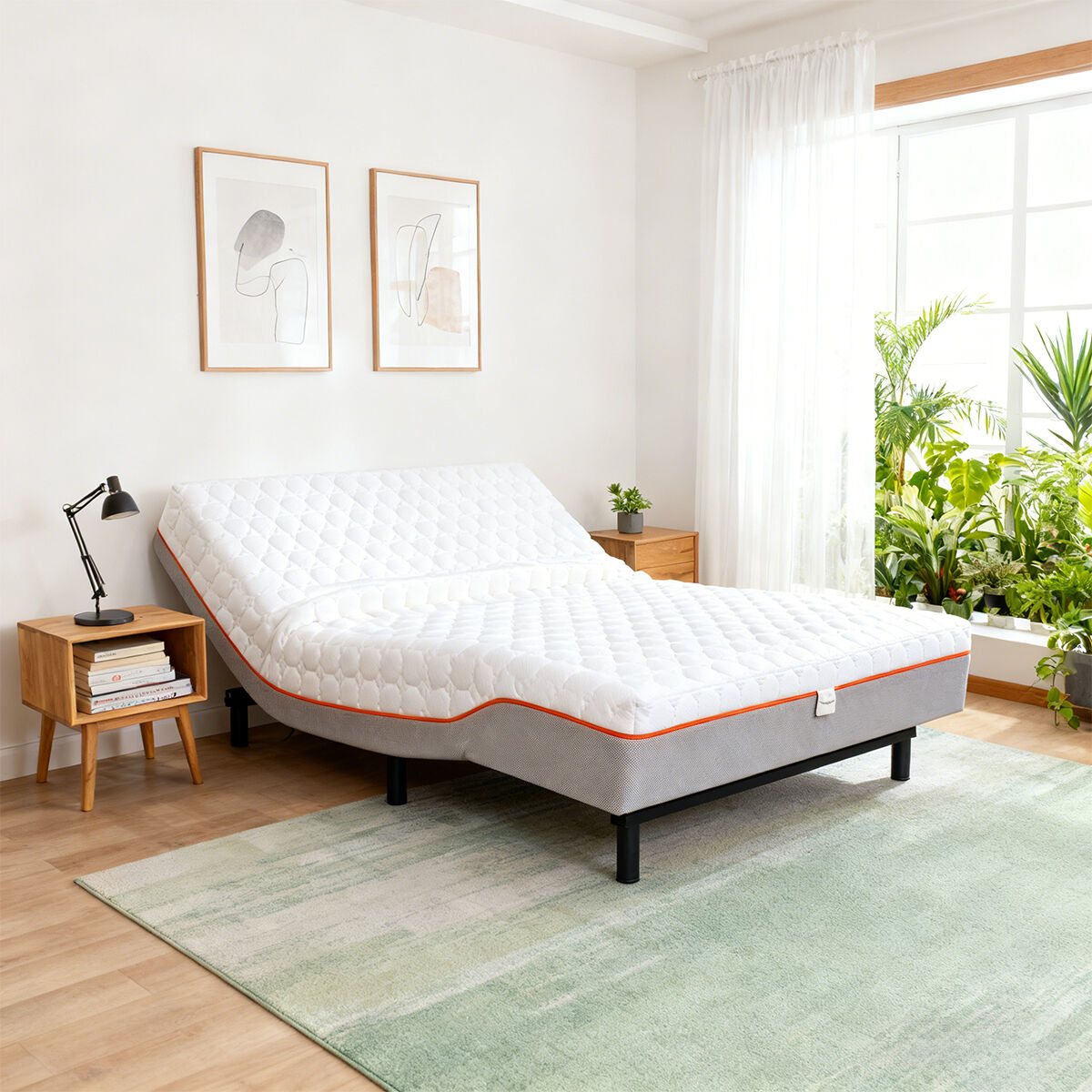
Scene-Based Height Adjustment for a Smart Bed Frame
Beyond personal physical needs, a smart bed frame can also adjust height based on different daily scenes to improve overall living convenience. When reading, watching shows, or using a tablet in bed, a slight height adjustment can create a more relaxed posture and reduce neck and shoulder tiredness. During deep sleep, returning to a standard ergonomic height helps the body rest evenly and supports uninterrupted sleep. When cleaning under the bed or storing items, raising the height of the smart bed frame creates more space and makes daily chores easier. Our smart bed frame is designed with stable structure and smooth operation, so height changes remain consistent even with frequent use. Sleep research experts note that flexible bed adjustments help reduce nighttime tossing and turning, leading to longer periods of deep sleep. With our smart bed frame, users don’t have to choose between comfort and practicality—they can enjoy both in one functional piece of furniture.
Our Advantages in Smart Bed Frame Design and User Support
As a professional provider of smart bedroom furniture, we put practicality, safety, and durability at the center of our smart bed frame design. Every smart bed frame we produce goes through strict testing to ensure stable height adjustment, quiet operation, and long-term performance. We use high-quality materials and dependable motors to ensure that the height adjustment function remains smooth even after years of use. Our team also provides clear, easy-to-follow guidance for users to find their ideal height settings, making setup simple even for those unfamiliar with smart furniture. We believe a truly useful smart bed frame should adapt to people, not the other way around. From individual users to household families, our smart bed frame delivers consistent comfort, reliable performance, and personalized experience. By choosing our smart bed frame, customers gain not only a functional piece of bedroom furniture but also a thoughtful solution that supports better sleep and daily wellbeing.
Table of Contents
- Understanding the Importance of Smart Bed Frame Height for Different Users
- Basic Principles for Adjusting the Height of a Smart Bed Frame
- Adjusting Smart Bed Frame Height for Different User Groups
- Scene-Based Height Adjustment for a Smart Bed Frame
- Our Advantages in Smart Bed Frame Design and User Support