 EN
EN


A Memory Foam Pillow Needs Time to Regain Its Shape After Being Compressed.
Time : 2026-02-08
My First Mistake With a Memory Foam Pillow: Rushing the Rebound
A few months back, I unboxed a brand new Xiarsr memory foam pillow for my guest room, and I made the classic mistake of testing it nonstop the second I took it out of the vacuum seal. I pressed it down over and over with my hand, frustrated that it didn’t pop right back up like a regular cotton pillow, and I even thought for a minute that it was a defective product. Then I talked to Xiarsr’s product design specialist, who laughed and told me I was skipping the most important step for memory foam pillows: giving them time to rebound. I left the pillow alone for 24 hours, and when I came back, it had expanded to its full contoured shape, soft but supportive, exactly what a quality memory foam pillow should be. A regular customer told me she had the same issue with her Xiarsr memory foam pillow—she unpacked it and used it immediately, complaining it was too flat, only to find it had fully regrown by the next morning. This small lesson stuck with me: memory foam pillows don’t bounce back instantly, and rushing their recovery means you’re not getting the full support and comfort they’re designed to deliver.
Why Memory Foam Pillows Can’t Regain Shape Instantly
To get why memory foam pillows need time to bounce back after compression, you have to understand the science of the material itself—especially the high-density slow-rebound memory foam that Xiarsr uses for all its memory foam pillows. Unlike regular foam or cotton fill, slow-rebound memory foam is a viscoelastic material that responds to pressure and temperature, molding to the shape of your head and neck for personalized support. When it’s compressed, whether in vacuum packaging for shipping or from constant use while you sleep, the air pockets within the foam get squeezed closed, and the molecular structure of the foam shifts into a compact state. For the memory foam pillow to regain its original shape, those air pockets need to refill with air, and the molecules need to relax back into their natural position—this isn’t an instant process, it’s a gradual one that depends on the density and quality of the foam. Cheaper memory foam pillows might rebound faster but lack lasting support, while high-quality memory foam pillows like Xiarsr’s take a bit more time because their dense foam structure is built to hold shape and support for years, not just bounce back quickly for a quick test.
Expert Take: The Science of Rebound for Quality Memory Foam Pillows
I reached out to Dr. Clara Bennett, a materials scientist who specializes in sleep product fabrics and foams, and she broke down the rebound process for memory foam pillows in simple terms: “Viscoelastic memory foam is engineered for slow recovery, and that slowness is not a flaw—it’s a feature.” She explained that the International Sleep Products Association (ISPA) has established industry standards for memory foam pillows, stating that high-density slow-rebound memory foam should take between 3 to 10 seconds to recover from light compression, and vacuum-sealed memory foam pillows need 12 to 24 hours to fully expand to their intended shape. Dr. Bennett also noted that the slow rebound is what makes memory foam pillows so effective for spinal alignment: “If a memory foam pillow bounced back instantly, it wouldn’t mold to your neck long enough to provide the support you need while sleeping. The slow recovery is what lets it hold the contour of your body, relieving pressure points on your cervical spine.” She praised Xiarsr’s use of high-grade slow-rebound memory foam, saying it’s perfectly aligned with industry best practices for creating supportive, long-lasting memory foam pillows.
Xiarsr Memory Foam Pillows: Engineered for Optimal Rebound and Support
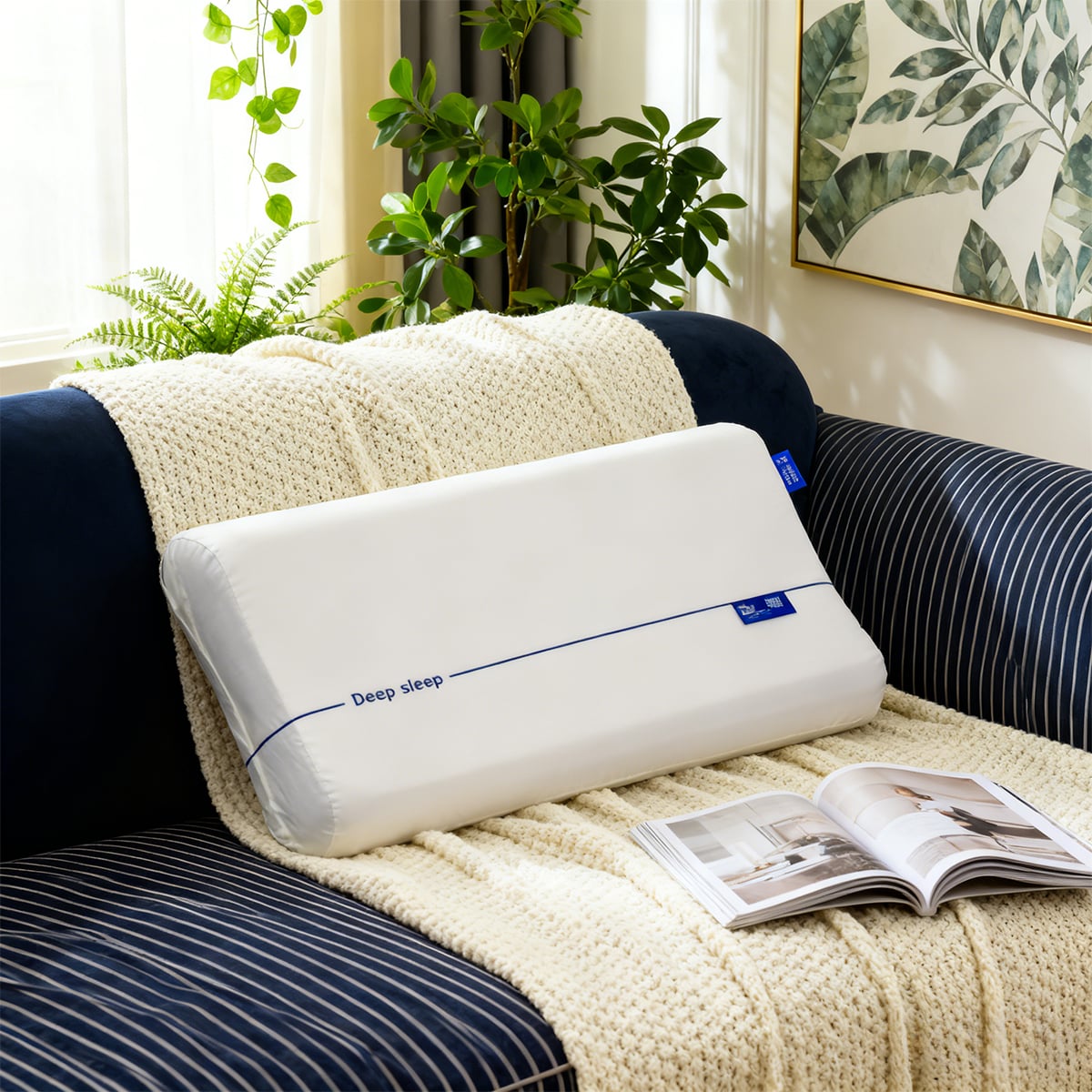
What makes Xiarsr memory foam pillows stand out from the countless generic options on the market is that we don’t cut corners on the foam quality—and that makes all the difference in their rebound and long-term performance. Every Xiarsr memory foam pillow is crafted with high-density slow-rebound memory foam, a premium material that’s carefully selected for its ability to balance slow rebound with durable support. Our memory foam pillows are vacuum-sealed for safe, compact shipping, but thanks to the high-quality foam, they expand fully within 24 hours of unboxing, holding their contoured ergonomic shape for years of use. Unlike cheap memory foam pillows that lose their rebound ability after a few months of compression from sleep, our memory foam pillows maintain their slow-rebound property, molding to your head each night and then gradually regaining their shape by morning, ready for the next night’s sleep. We also pair our memory foam with a breathable cover that keeps the foam at a consistent temperature, which helps the foam maintain its molecular structure and rebound ability—heat can break down memory foam over time, but our cover design prevents that, extending the life of your memory foam pillow even further.
How to Care for Your Memory Foam Pillow to Preserve Its Rebound Ability
Giving your memory foam pillow time to rebound after unboxing is the first step, but proper daily care is key to keeping its rebound ability and support intact for years—and Xiarsr makes it easy to care for your memory foam pillows with simple, practical steps. First, always let your memory foam pillow air out for a few hours each morning after use; this gives the foam time to regain its shape after being compressed by your head all night, and it also lets moisture from sweat evaporate, preventing the foam from breaking down. Second, avoid pressing or squishing your memory foam pillow unnecessarily—while it’s tough, constant rough handling can wear down the foam’s molecular structure and reduce its rebound over time. Third, use a removable, washable cover on your memory foam pillow (all Xiarsr memory foam pillows come with one) to protect the foam from dirt, oil, and moisture, which can all compromise the foam’s ability to rebound. Finally, if you need to store your memory foam pillow, never vacuum-seal it again—store it in a cool, dry place with plenty of air circulation, so the foam stays in its natural shape. Following these small steps means your Xiarsr memory foam pillow will keep its slow rebound, its supportive contour, and its comfort for years, making it a smart investment in your sleep health.