EN
EN


What Makes a High-Quality Mattress Suitable for Smart Beds?
Core Smart Mattress Features That Enhance Sleep Intelligence
Adjustable Firmness via Air Chambers or Modular Foam Zones
Smart mattresses today offer customized comfort thanks to their ability to adjust firmness levels on the fly. The top models come equipped with silent air chambers controlled via apps that can inflate or deflate specific areas like the lumbar region or shoulders based on what feels right for each person's preferred sleeping position and pressure points. There are also options made from modular foam setups where different sections have varying density levels. Softer parts help support hips and shoulders when someone sleeps on their side, whereas firmer spots provide extra backbone support for those who lie on their back or stomach, keeping the spine aligned properly. These adaptive systems work all night long adjusting as people move around bed, which helps prevent uncomfortable pressure points from forming and cuts down on restless movements during sleep. Studies show that maintaining good spinal alignment leads to about 36 percent fewer wake ups at night plus more time spent in the deeper stages of sleep that actually rejuvenate the body.
Temperature Regulation with Phase-Change Materials and Active Cooling
How our bodies regulate temperature plays a big role in falling asleep and staying asleep all night. Research shows that when body temps get too unstable, it causes about three quarters of those annoying nighttime interruptions. That's why high end smart mattresses now come with these special materials called PCMs - basically tiny capsules mixed into the comfort layer that soak up extra heat as we first drift off and then slowly give back warmth later on in the morning. Some models take this further with actual cooling systems that pump either cooled water or air through hidden channels under the mattress surface. These keep things right around that sweet spot between 60 and 67 degrees Fahrenheit (which converts to roughly 15.5 to 19.4 Celsius) where most people find themselves drifting off faster. And for couples who always seem to disagree about bed temps? There are dual zone versions where each side can be adjusted separately so one person doesn't have to suffer while the other freezes or sweats through the night. Pretty clever stuff really.
Mattress Construction Designed for Seamless Smart Bed Integration
Sensor-Ready Layer Architecture and Ventilated, Low-Interference Foam
The way smart mattresses work depends heavily on how they're built from the ground up, especially when it comes to getting accurate readings from sensors and making sure actuators respond properly. The top layer usually features these special open-cell foams that let air flow through them while also keeping things cool and reducing interference with electronic components. This matters a lot because if the mattress gets too hot or there's electrical noise, the pressure maps and motion detectors won't work right. The whole breathability thing keeps air moving around all those delicate circuits so nothing overheats or sends out false signals. Below that, manufacturers often include lighter density foam layers that serve as buffers between the actual sleeping area and whatever motors or air bladders might be inside. These transitional zones help keep vibrations and sounds contained while still allowing the mattress to adjust itself based on what the sensors detect, all without compromising how comfortable someone actually feels lying there.
Reinforced Edge Support and Articulated Base Compatibility
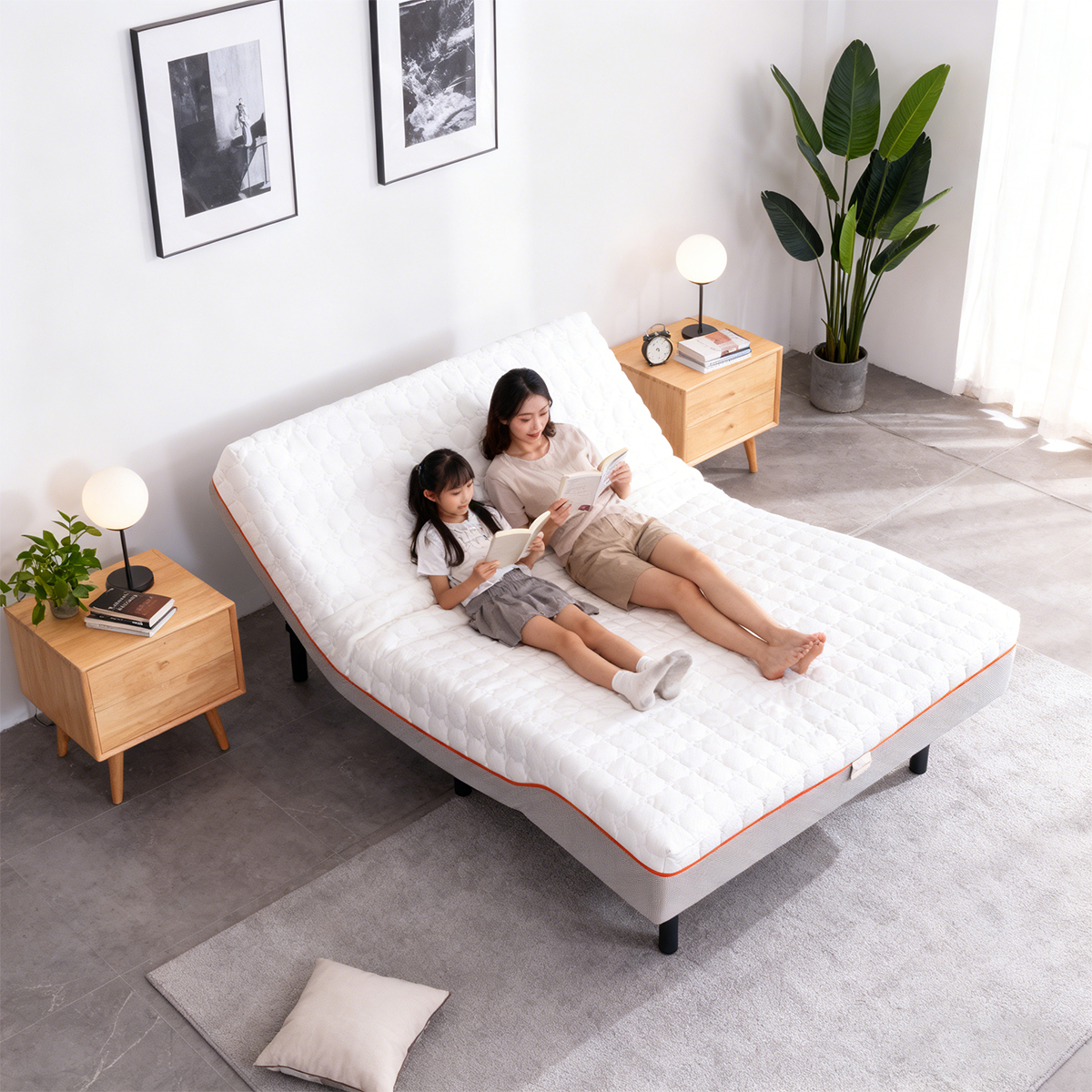
Edge reinforcement usually comes from dense perimeter foam or coils wrapped around the sides, which stops the bed from sinking in when someone sits on the edge while adjusting settings through an app or just using it day to day. Maintaining this structure matters a lot during those times when the adjustable base moves the head or foot section up and down again and again. The bottom layer often contains cross linked polymer foam that doesn't get permanently flattened even after many thousands of these adjustments, so the bed stays stable for years. What we end up with is consistent tension across every angle position, meaning no more sliding around, gaps forming, or parts of the mattress not matching up properly with the base underneath.
Performance Benchmarks: How to Evaluate a Smart-Ready Mattress
Dual-Zone Adjustability, Motion Isolation, and Responsive Load Distribution
Smart readiness really comes down to three main things working together: having separate zones for adjustment, good motion isolation, and how well the mattress distributes weight when someone moves around. Dual zone systems let partners set different levels of firmness or temperature on their side of the bed, which makes sense because people vary so much in weight, sleeping positions, and how sensitive they are to pressure points. Motion isolation is what stops one person from feeling every little move the other makes during the night. Manufacturers achieve this with special foam layers, individual coils wrapped in fabric pockets, or carefully tuned memory foam sections. When someone shifts position during sleep, responsive load distribution automatically adjusts where pressure builds up at important spots like hips, shoulders, and feet. This keeps the spine aligned naturally without anyone needing to manually readjust anything. Companies test these features with detailed pressure maps that actually show reduced tossing and turning throughout different stages of sleep. Getting all three right means better compatibility with smart beds while also providing long term comfort that helps mattresses last longer overall.
Durability, Certifications, and Long-Term Compatibility with Smart Bed Ecosystems
When investing in a smart mattress, durability and future-proof design should be at the top of anyone's checklist. Smart shoppers want materials that last, so look for things like high resilience foam, good edge support, and cores that have been tested for articulation. These materials help maintain shape and support even after years of nightly use, typically around 12 to maybe 15 years give or take. Certifications really do count for something here. The OEKO-TEX Standard 100 basically means no bad stuff touches skin areas, while GOTS certification shows they used organic fibers and followed eco-friendly manufacturing practices. This matches what most people expect nowadays in their smart homes regarding both health and environment. Also important is going for designs that can adapt over time. Mattresses with replaceable sensors or bases that get software updates stay relevant as sleep tech keeps changing. Combine this with clear information about where materials come from and those rare 15 year warranties, and suddenly what was once just another bed becomes something special. It turns into a long lasting smart centerpiece that doesn't just follow new trends but actually gets ahead of them sometimes.